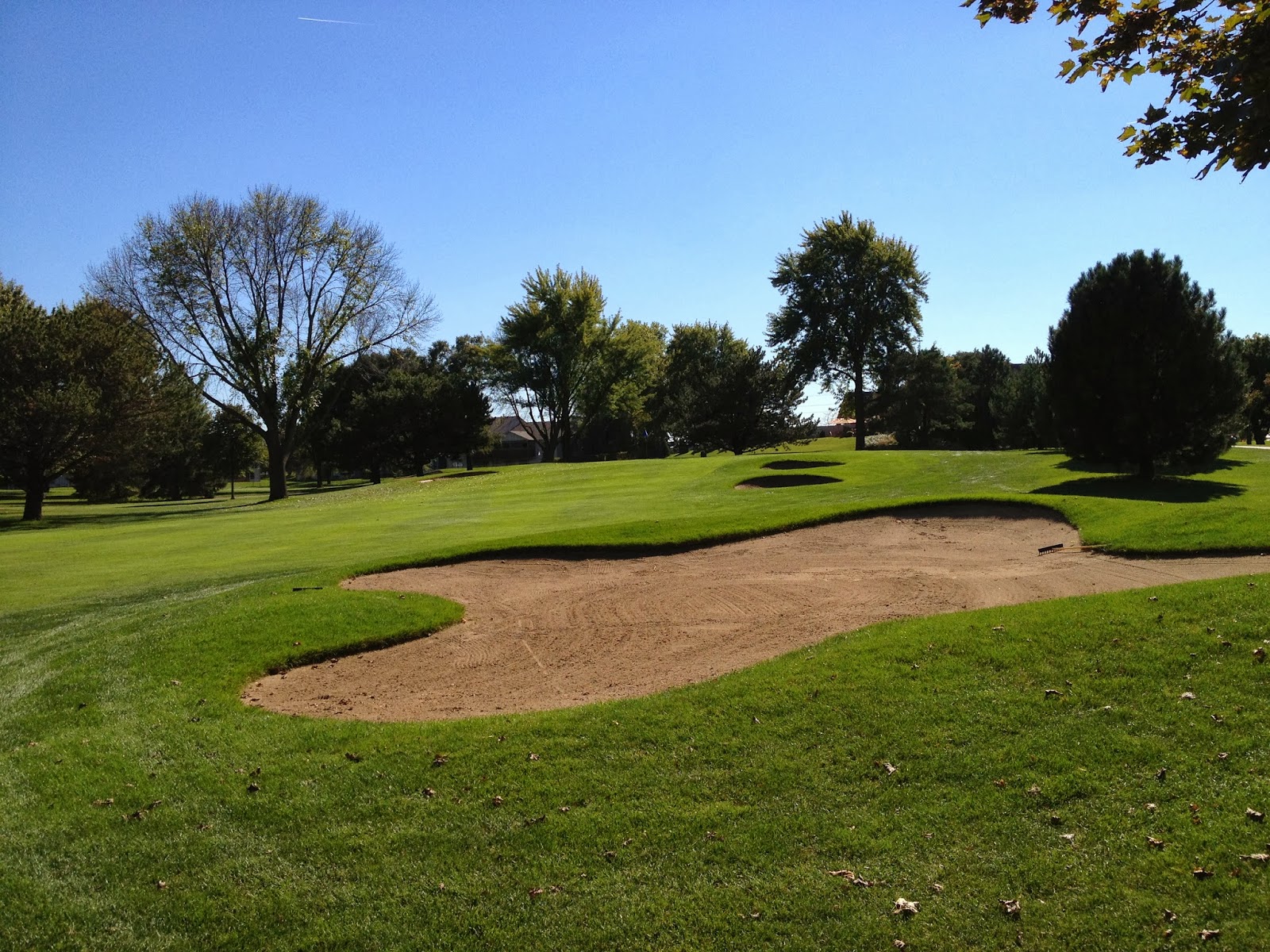
Monday, August 1, 2016

The Majors - A Year In Review

Once again another summer passes and golf’s major championships are behind us.  A couple weeks earlier thanks to the Olympics.  This year I was excited with the group of courses as I have been to Augusta a couple times and played both Oakmont and Baltusrol.  I always find it much more fun to watch a tournament on TV after you have played the course and know what the golfers face.
With that in mind let’s recap what we saw this year:

The Masters

As with every year, the golf season up north seems to begin with The Masters.  Something about seeing Augusta National on TV gets you ready for the upcoming season.  This year’s tournament started out in exciting fashion.   Last year’s winner, Jordan Spieth began where he left off 2015.  An opening round 66 gave him a two shot lead.

Spieth built the lead to five in the second round but faltered on the back nine, something we will see again.  He held a one shot lead over Rory McIlroy, setting up a Saturday round with two of the best in the world.

McIlroy faltered in the third round and shot 77 to fall out of contention.  Spieth did not fare much better with a 73, but still maintained a one shot lead over Smylie Kaufman.  It was a record setting seven straight rounds with the lead for Spieth.  58 year old Bernhard Langer, a two time champion was just two back and the powerhouse trio of Jason Day, Dustin Johnson, and young Englishman Danny Willett were three back going into Sunday.

Spieth started out brilliantly on Sunday and showed the poise he had in winning the year before.  By the time he reached the tee on the tenth he held a five shot lead over Willett, who figured he was playing for second place.  But as we have heard so many times, The Masters doesn’t begin until the back nine on Sunday.

Spieth bogeyed ten and eleven, yet still held the lead on the twelfth tee.  That’s when things unraveled for him.  Two shots into Rae’s Creek and a quadruple bogey dropped him out of the lead.  Willett birdied 13, 14, and 16 before finishing with two pars.

Meanwhile, Spieth recovered from the 7 at twelve and birdied 13 and 15.  He needed two birdies on the last three and that didn’t happen.  Willett became the first European since 1999 and Englishman since 1996 to capture The Masters.

While most will remember this Masters with Spieth’s collapse, we must look at Willett’s bogey free 67 in the final round.  While others were losing their cool, Willett kept his on the back nine.  He finished in style and is a deserving champion.  I don’t think this will be the last Major we see him win.

The US Open

The US Open returned to Oakmont for the ninth time, the most of any course.  This is a fitting venue and is my favorite inland course that I have played in the States.  Oakmont is beautiful and difficult.  After the removal of nearly every tree you can see sixteen holes from the clubhouse.  Thick rough, over 200 bunkers, and fast greens make this a great test of golf.

Leading into the first round the course was playing firm and fast, exactly how the USGA wanted it.  But when the tournament began, the first round was suspended three times and called off before the afternoon rounds could begin.  Three inches of rain overnight and the firm conditions were lost to a soft golf course.  This wasn’t the only time weather played a factor in the 2016 Majors.

It took until late Saturday morning for the field to settle out and the start of the third round.  Dustin Johnson, last year’s runner-up, held a one shot lead over unknown Andrew Landry, playing in his first major.  In fact, in the top ten Sergio Garcia, Jim Furyk, and Lee Westwood were the best known players and Furyk the only Major winner.

Still trying to play catch up to the weather the third round was called by darkness with Johnson still having five holes to play.  Play resumed on Sunday morning and Shane Lowry played his last four holes in two under and took a four shot lead over Johnson and Landry to start the final round.

Lowry and Landry were paired in the final group and the pressure of trying to win the US Open had its effect.  Lowry finished with a 76 and Landry shot 78.  Many were in contention going to the back nine with Johnson playing steady golf and holding the lead.  Problem was, nobody knew how big of a lead.

It came up on the twelfth tee that the USGA was looking at whether Johnson caused his ball to move back on the fifth green.  They said that it would be reviewed after the round, so he never knew how big the lead was, nor others to how far behind.  This created difficulty in knowing how aggressive to play.

Johnson took all of that out of play with a brilliant 69 to win by four.  After the USGA said he incurred a penalty it became a three shot victory.  This penalty controversy overshadowed the tournament.  People began to say it took away golfers policing themselves on the golf course and brought TV rulings more into play.  This was a shame as Johnson is a fan favorite champion.  As with Willett, I think we will see more of these Major wins for him.

The Open Championship

The Open returned to Royal Troon, a favorite in the Open rotation.  It is a great links course that featured two nines that play completely different.  You have a front nine that is getable by the field where you need to get some birdies.  You then hang on through the back nine.  The famous par 3 eighth, “Postage Stamp” hole, looms in the middle of the round.

This year’s tournament started out on a high note.  2013 champion Phil Mickelson opened with a 63, tying low round ever shot in a Major.  Mickelson lipped out on the final hole for 62, a putt that seemed to be in the hole within inches.  He held a three shot lead after the round.

Phil shot 69 in the second round and lead Henrik Stenson by one entering the weekend.  Keegan Bradley and Soren Kjeldsen were three back and defending champion Zach Johnson was still in contention.

High winds impacted the third round and it was announced that the R&A opted not to mow the greens so they could play the round without issues of the ball moving when addressed.  It was difficult for players to adjust to this with Stenson tying for low round of the day with a 68.  That was enough for a one shot lead over Phil and set up a two man race as they were five clear of the rest of the field.

The final round ended up being one of the best duals in golf, equalizing the “Dual in the Sun” between Nicklaus and Watson in the 1977 Open.  The lead changed hands or were tied many times on the front nine with Stenson recording five birdies and Mickelson a birdie and eagle.  After Stenson bogeyed the 11th they were tied.  Starting on the 14th hole Stenson recorded three straight birdies and built a two shot lead.  Stenson closed with a birdie on eighteen for another record tying 63 and his 20-under total of 264 the lowest in Major history.  He became the first Scandinavian man to win a Major.

PGA Championship

Historic Baltusrol Golf Club was hosting its ninth Major championship and first since Phil Mickelson won the PGA there in 2005.  One interesting thing about the Lower Course is it plays to a par 70 and you don’t play a par 5 until you finish with two straight on 17 and 18.  The eighteenth is the site of Jack Nicklaus’ famous 1-iron in the 1967 US Open.

Weather played a factor is this championship as well.  Rain and lightning caused many delays.  These weather delays, combined with two weeks between the previous Major, made it hard to get excited for this championship.

Jimmy Walker opened with a 65 and a one shot lead to start the tournament.  He followed that with a 66 and was tied at the halfway mark with Robert Streb, who shot 63.  This was the third 63 in Majors this year.  World #1 Jason Day was two back in his defense of the championship.

The third round was nearly a total wash-out as only 37 players finished the round and the leaders never teed off.  With the forecast, many wondered why the PGA did not start play with threesomes off two tees.  With that they probably could have gotten the round in on that day.  The thought was that the TV networks were running the show.  That backfired as they had nothing to show on Saturday afternoon except the rerun of last year’s tournament.

Golfers teed off at 7am on Sunday to get in the final 36 holes.  This long day of golf proved not to be very exciting.  The wet course played fairly easy from tee to green.  Most struggled on the greens due to the amount of traffic for the day.  During the final round 12 of the 18 holes did not record a score higher than bogey.  Meaning nobody could make a charge, nor did any golfer falter.

It came down to Walker and Day on the last couple holes.  Walker held a two shot lead most of the back nine and when he made birdie at 17 took a three shot lead.  At the same moment Day hit his second shot on 18 to about 12 feet and made the putt for eagle to cut the lead to one.  Walker played the final hole safe and sank a 3 footer for par and his first Major championship.

All in all this year’s Majors were anticlimactic.  Instead of Willett winning, people talked about Spieth’s collapse.  Instead of DJ’s first Major after many near misses, it was talk of the USGA rules decision.  Talk all weekend at the PGA was the weather and the fantastic job the crew did just to get the course playable.  It was The Open that produced the most excitement with two great players battling it out with terrific golf.

Next year’s lineup will make for interesting, if not exciting golf.  We always have The Masters and the history that tournament brings.  The US Open will be at Erin Hills in Wisconsin.  I just played that course and while it is fairly open off the tee.  The approaches to the greens will be very difficult as the greens have many roll-offs and some pin placements will be hard to get to.  The bunkering is difficult and they could stretch the course out to 8,000 yards.  It should be some exciting golf if the weather cooperates.

The Open returns to Royal Birkdale for the tenth time.  It last hosted in 2008 when Padraig Harrington defended his title for back-to-back championships.  Finally, the PGA goes to Quail Hollow in North Carolina.  It will be its first Major championship, but the pros have seen this course before.  It currently hosts the Wells Fargo Championship played every spring on the PGA Tour.  With a well-known course it could prove to be exciting as well.  Rory McIlroy has won there twice so he could be the favorite.


The countdown has begun.  It’s only 248 days until The Masters. 

Monday, July 18, 2016

Is American Golf too American?

Another year of The Open Championship and I can always say that I love watching this tournament.  When you watch golf being played on links land, you just get a special feeling of that is how golf is meant to be played.  Maybe it’s because I’ve had the opportunity to play links golf.  I just find the game over there much more exciting.

You have to be very creative to play good links golf.  As we saw on the telecast, the conditions are constantly changing.  More angles come into play as you try to play away from hazards and judge the wind conditions.  We don’t usually see that here in the States.  This got me thinking that maybe golf here has gone beyond its roots.

Your first comment may be that we don’t have the similar land forms that we find on links golf.  There are few, such as Bandon Dunes, but most of our golf is played inland.  However, I have played the inland, or heathland courses of England.  You still get a special feeling when you play these courses.  Golf is just different over there and I’ve often thought that we are trying to do too much with our courses.  Here are a few examples of where things differ.

Green Speeds

The first thing that came to me on the differences is when they mentioned that they did not cut or roll the greens for Saturday’s round.  I wonder if they would ever do that for a tournament here.  I recall the US Open at Shinnecock Hills in 2004.  The USGA starved the greens of water and got them to a speed that was unattainable. 

In that tournament, Phil Mickelson three-putted from 4ft. Tiger Woods said, “This is our national championship and Shinnecock Hills is a great golf course, but they lost control of it. This is not supposed to be how golf is played.”  I thought maybe they had learned something until this year when rain caused them to double or triple cut and double roll greens to get a certain speed.  We saw what happened with Dustin Johnson at those speeds.

At Troon the R&A let the weather dictate how the course played.  They made the decision on Saturday not to risk having an issue on the greens and kept them slower.  Did this impact scoring?  Not at all.  Players were forced to adjust and most did, but they did not shoot the low round of the week that day.  All the players said that the course played great and nobody complained about the greens.  You might say that the course played easy as 20-under won and another was at 17-under.  That was only two of 156 golfers.  Next lowest score was 6-under.  That just shows that two guys played great golf for the week.  It was much more exciting to watch them battle to make birdies then struggle to make pars.  If the course setup is supposed to determine the best golfer, that happened.  Stenson and Mickelson were the class of the field and Stenson proved to be the best in the end.

Bunkers

Another thing to marvel at is how the bunkers played and set up the golf course.  In the UK, bunkers are hazards!  Players calculate their game plan to avoid them at all cost.  You would hear the announcers say that you need avoid them or you will have to pitch out without reaching the green.  Fairway bunkers were basically a stroke penalty.


You also saw many players, especially on the Postage Stamp hole, have to play sideways or away from the pin.  If they tried to play a bold shot, sometimes they ended up back in the bunker.  Players did not complain about this, they knew that is the how the game is played on this course.

I can’t tell you how many times I’ve consulted with a course and they say they can’t get to the green from a certain bunker.  They expect to have a chance with every shot.  Give them a bad lie or poor stance in the bunker and it is the fault of the design or maintenance.  We have lost the art of the bunker being a hazard, something I may address in another blog.

Do we try to get everything too perfect?

Expectations of course conditions in the US is high when it comes to golf.  A lot of that has to do with the expense of the sport.  If you pay $100 for a round of golf, you expect perfect.  It amazes me that some of these same people don’t fix ball marks or rake bunkers.  Yet everything needs to be perfect.  Golfers in the UK still believe in the “Rub of the Green”.  Get a bad lie in the bunker and they learn how to play it.

Golfers here want perfect sand, fast greens, and acceptable rough where they can advance the ball to the green.  For the most part, our golf courses supply that type of course.  This is all a result of our golf course superintendents.

Superintendents today are the most educated we have ever seen.  They continue to take classes to learn about new innovations and use these in the most environmentally sensitive way.  Technology has advanced to supply them with excellent mowers, state of the art irrigation, and grasses that resist diseases.  If a member, committee, or patron asks about doing something on the course, they either find a way to do it or explain why it can’t be done.  Our superintendents are pushed to provide us with outstanding conditions, most often in difficult growing environments.  In some ways they are their own enemy by always supplying what is demanded.  I don’t envy them on a 90 degree summer day in Chicago.

Will there ever be change?

Will we ever lower our expectations of golf course conditions?  Not as long as golf is shown on TV.  Professional golf offers great exposure for the game.  Each weekend we see 12-15 hours of live golf on TV.  That is more exposure then the NFL.  However, it doesn’t help golf when we see ten or more mowers rolling down a fairway and a hundred volunteers raking bunkers and mowing greens.  For one week a year, these courses are in the best shape possible.  Local golfers see this and expect the same with a ten man crew.

Superintendents are getting better at explaining when expectations get beyond budgetary reasons.  More explanation is needed and it would be nice if the Golf Channel, or broadcast TV, would take 5-10 minutes each week to show how many people it takes to achieve these conditions.  Then they could relay that this is for this one week and your local course should not expect this every day.

Golf today is about sustainability.  The more sustainable we can make our golf courses, the better we can make the sport.  Even a slight adjustment in expectations will go a long way.  Let’s appreciate smooth greens over fast greens, don’t worry if you see a weed, and accept that bunkers are hazards.  Golf has been around for over 500 years.  It is our job to set it up for another 500.   

Tuesday, July 5, 2016

Do We Have a Big 3 in Golf?

Last week I saw the David Feherty episode with Rory McIlroy.  This concluded three episodes this year that also included Jordan Spieth and Jason Day.  At the time it was recorded, Rory was #3 in the world behind Day and Spieth.  Rory was asked about them being the Big 3 in golf today.  He said there are many great players today.  Feherty’s question it got me thinking about the same topic.

Some would like to think we have a Big 3.  In the TV and Tournament market it helps with them marketing the events.  If you can promote one, two, or all three of these players at your tournament, it helps with ticket sales and viewership.  That’s not a bad thing.  The mores eyes we get on golf, the better chance we have to grow the game, or at least keep it stable.

To others, they say it slights all the other players out there today.  You have Rickie Fowler, Bubba Watson, Masters Champion Danny Willett, and new US Open champ Dustin Johnson who are great players and big draws.  You still have tour veterans like Adam Scott, Sergio Garcia, and Phil Mickelson that bring people out to watch.

From my point of view, none of this is bad for the game of golf.  I enjoy seeing all of these golfers play.  Most of them have already won a tournament this year.  Mickelson and Fowler are the exception so far.  If people want to label a Big 3, that’s fine.  It seems that when another young player wins a big tournament, such as Fowler winning the 2015 Players and Dustin the recent US Open, talk of a Fab 4 always surface as well.  It just reinforces the depth in pro golf today.

What we need to take from all of this is that golf is in a good spot.  These players are all good ambassadors for the game.  Jordan, Jason, and Rory are down to earth players who interact with the fans, and carry themselves well, both on and off the course.  Rickie, Dustin, and Bubba are adored by the younger golfers.  Rickie more because of his Puma relationship and stylish clothes, Dustin and Bubba because they hit the ball a mile.  All these guys put eyes on the TV and fans on the grounds.

With all of this, I’m not saying Tiger is done.  He will come back, and when he does it will be the most hyped tournament of the year.  I’m sure Tiger will even win multiple tournaments, maybe even a Major going forward.  All good for the game.  How exciting would it be to have Tiger compete with any of these golfers in the final round of an upcoming Major Championship?

The game of golf is strong and I think some of the stronger days are still ahead.

Tuesday, June 21, 2016

DJ, The USGA, and Green Speeds

The conclusion of the US Open at Oakmont was a stirring finish to a great tournament.  First, we had Dustin Johnson winning his first major.  We also had a bizarre rules fiasco going on during the final round.  And then we had some of the most treacherous greens on the planet.

Before we get into that let’s look at the golf course.  Oakmont is my favorite inland course I’ve played in the United States.  I’ve walked Augusta, but I have never seen Pine Valley, so I can’t judge those right now.  Cypress Point is my favorite US course, but it is hard for any course to compete with that setting of ocean, dunes, and woodlands.  They could play the US Open at Oakmont every year and I’d be happy with that.

DJ

Dustin went out and won this tournament.  He played great the whole week and bounced back from any bad holes.  I think he learned a lot from last year’s lost to Spieth.  He kept in the moment, even when the rules infraction was brought up on the twelfth tee.

I don’t know if anyone would have picked DJ to win a US Open at a course like Oakmont.  Tight fairways and fast greens.  He can bomb it out there, but most thought he wouldn’t be able to keep it in play.  It just shows that with talent like that, you can always put it together for one week.  He did that.

The USGA

I waited an extra day before writing this to see more reaction on the ruling put in place for DJ’s ball moving on the fifth green.  I’m now glad I did.  We have heard many pundits reaction, fan reaction, and now even the USGA reacted again.  Their latest stance was that the ruling they made was correct, but they should have enforced it right away instead of waiting until the end of the round.

I can agree with that.  Why have all of this hanging out there for all the golfers.  What I don’t agree with is that the movement of the ball warranted a penalty.  Yes, he soled his club on the side of the ball.  So how does that cause the ball to move backwards?  I think it was more a result of the course conditions.  I'm sure everyone is glad it didn't impact the final result.

Green Speeds

Oakmont is known for fast greens.  They are some of the best around.  When I played there you were put in awe with the slopes and speed.  You do get used to the speed, but you are putting defensive all day.  The saying is true that when putting at Oakmont, you worry about your second putt before you hit the first one.

But are we at a point where speeds are getting out of control.  Nicklaus said when he won there the speeds were 10 and that was fast.  In 2007 there were at 12.  This year they tried to get them to 14.  If you are triple cutting and rolling each green to achieve a speed, you may be letting your ego to protect par get the best of you.  I hope we are not heading down a slippery slope on these speeds. (Pardon the pun.)


I think these speeds and conditions are what caused DJ’s ball to move.  When you have them that smooth and fast there is not much there to keep your ball in place.  I’m surprised it didn’t happen more out there.  Perhaps if it hadn’t rained on Thursday.

In conclusion, it turned out to be a great US Open.  We had many in contention at the end, most of whom have not won a major.  It came down to the guy that kept his head.  My only regret was that the rain impacted the play of the course.  It would have been a lot of fun seeing these golfers play on firm and fast Oakmont.  Maybe that will happen when they return in 2025.

Monday, February 17, 2014

Don’t design around trees

In yet another example of why not to design a golf hole around a tree, Augusta National loses the iconic Eisenhower tree.  The tree that President Eisenhower constantly complained about, thus giving it its name, was severely damage by the ice storms in the south last week.  The tree was also the incident where Tiger Woods injured his knee in the pine straw in 2011 and missed four months and two majors.

Many will say that the tree is an important part of Augusta’s history.  I don’t know of any other tree that when you say it’s name, people know what, and where you are talking about.  Yes, it was a majestic tree, and it is always sad to lose a tree of this stature, as long as it doesn’t interfere with turf conditions.  But truth be told, the tree has had no significant impact on playing the golf hole, minus Tiger’s knee, since the concern over distance.

I always tell clients not to design a hole around a tree, because you never know if that tree will be there tomorrow.  This is living proof!  A storm, or a disease, can wipe out your signature tree.  Then you are left with a golf hole that could be void of strategy. 


What can you do about it?


I remember the Eisenhower tree situation being brought up in the past.  The Club has always had this tree, and others, wired for protection against lightening damage.  I’m sure they thought this day would come.  In fact, they had already planted a new tree past Ike’s tree in preparation.  That tree may poise the same problems for future tournaments like Ike’s tree did in the days before the new ball.

So, if you have a tree that you would hate to lose put a plan in place should, and when, that day happens.  It could include looking at other hazards to put strategy back into the golf hole.  That way your not in a panic when the day comes.

To see photos and a thread about Ike’s tree, go to GolfClubAtlas.com

Monday, January 27, 2014

The Polar Vortex and Golf

It’s -8 degrees as I write this blog and it’s not supposed to get above zero for the next 36 hours or so.  A Polar Vortex, they call it.  A term I’ve never heard in my 49 years on Earth, and we’ve had temperatures this cold before.  This year it has not only happened once, but this is the second time.  You’ve probably heard or said this before, “But it’s starting to get old”.  However, there may be a bright side to all of this cold weather and it’s impact on golf.

It’s only January 27 and next week the Groundhog will tell us we still have six more weeks of winter.  Fitting since the Spring Equinox is March 20.  So that means we may still have a long ways to go before winter’s over.  More days to stay inside, which means more days of cabin fever.  So my prediction is that by the time the snow melts, the grass greens up, and golf courses in the Midwest open, people will be stumbling over each other to get outdoors.

Therefore, I think golf courses will see an influx of play in April and May.  It may even be bigger then any other spring.  No matter the temperatures, people will just want to be outdoors.  It’s a good thing our course superintendents have had the long winter to get their equipment ready and recharge the batteries.  More golfers means more people to work around to get the course back in shape.  But I don’t think they’ll mind, they’ll just be glad to be outdoors themselves.
 

I hope this prediction comes true and this cold winter doesn’t mean another hot summer like 2012.  We could use a break with some normal temperatures.  I know I’m looking forward to getting back out on the course.

Monday, October 28, 2013

The good, the bad, and the ugly of the PGA Tour

Part 3 - The Ugly


Here are some of the ugly things that have been happening this year.

Tiger Wood’s rules run-in

I changed my writing of these blogs after the incident between Tiger Woods and Golf Channel’s Brandel Chamblee’s surfaced last week.  This may become the ugliest thing to hit golf in a long time.  You can check it out here.  If you click the link on Geoff’s site you can see all the run-ins Tiger had this year.  Saying Tiger was “Cavalier with the rules” sparked an ugly response from Tiger’s agent.  I’m not going to delve into this any more than this as I don’t want to be dragged into the lawsuit, although that may be great exposure.

Note:  Since the original writing of this story, Brandel has apologized over his twitter account.  However, Tiger says that wasn't the case.  You can read more on this exchange at www.geoffshackelford.com.

Phil Mickelson’s tax problem

Do you remember this comment? 

“If you add up all the federal and you look at the disability and the unemployment and the Social Security and the state, my tax rate is 62, 63 percent,” Mickelson said. “I’ve got to make some decisions on what I am going to do.”

Paying away 62 percent of your income would be tough to swallow. But many people don’t feel bad for someone when the left over amount is over $16 million. But it still means he lost over $26 million. I know that would upset anyone.

Still, those comments just put more fuel to fire that golf is a spoiled, rich man’s game. Heck, just the other week a question was asked on Family Feud to name a sport played by rich people and the person answered golf. That just about explains it.


These are just two things, but they happened to the biggest names in the sport.  It’s these types of incidents that gives the game a bad rap.  Golf still has a lot to overcome.  We have made strides in the environmental department, but there is still more to do.  We will get there and golf will remain a sport that people will play for a lifetime, and that’s about as good as a sport can get.

Wednesday, October 23, 2013

The good, the bad, and the ugly of the PGA Tour

Part 2 - The Bad


As I said in the good segment, you don’t hear people write about all the good the PGA Tour does.  That’s because writing about these things doesn’t sell.  They like to dwell on the problems.  It’s like an accident, when it’s bad you don’t want to look, but find that you do so anyways.  In that vein, here are some of the bad points the Tour brings out and how it impacts the game.

Making course conditions perfect

For 1 week a year a tournament visits a course.  For the golf course superintendent, it is 51 weeks of preparation for the event.  One bad comment during that week can mean a person’s job.  Course conditions have to be perfect, or as close as possible given Mother Nature.  So what we see at these courses is state of the art technologies.  You have Sub-Air systems that keep the greens, and in some cases fairway, at the proper moisture and firmness.  Bunker sand that has been trucked in for miles so they players get a perfect lie.  (Did we forget that these are hazards?)  And greens that are mowed to lowest heights possible to provide the best surfaces.

So a golfer or club member sees this on TV and thinks his course should always be like that.  They complain to their superintendent and put stress on them to keep the course in tip-top shape.  Courses spend more money than they need to on bunker sand hoping it will do the same for their game as for the pros.  We just keep pushing everything to the limit before something breaks and the person is booted out the door.

All this does is increase the cost of playing the game.  These added expenses to make the course perfect get added to the cost of a round of golf.  And when the course can’t cover the expenses, they either cut the budget and the condition suffers, a management company comes in, or it gets sold. 

Slow Play

Slow play is always a topic on the Tour.  But nobody will ever do anything about it.  Brandt Snedeker had a great idea that other day.  He basically said, “Start enforcing a penalty”.  Golfers, and especially kids, see guys checking the wind several times, getting yardages down to the fractions, and reading putts from six angles and they start to do the same thing.  Tell me how a twosome or threesome of Tour players, who take 70 or less strokes a round, don’t have to look for their golf ball or rake a bunker, take over 4 hours to play a round of golf.  I know they are playing for a lot of money, but many of these guys make more money off the course then on the course.  Brandt’s right, give a penalty and it will get cleaned up.


There may be more, but I'm going to dwell on that.  In the next blog we'll talk about the ugly.

Monday, October 21, 2013


The good, the bad, and the ugly of the PGA Tour

With the 2014 PGA Tour season just beginning I thought I would touch base on how the Tour affects the game of golf.  Over the next couple blogs, I’ll look at the good, the bad, and the ugly of the tour.

The Good

Economic Impact

There are about 46 PGA Tour events in the year.  These events go all around the country and the world bringing golfers and fans with them.  This provides a huge economic boost to a community.  For instance, the Tour announced that it is moving the Fry.com event to the Silverado Resort in Napa, CA for 2014.  It is already estimated that this will bring in between $20 million and $40 million for the 7-days.  That is a huge boost to the local businesses.  Just think what the Tour does in small markets like the Quad Cities and the boost it gives.

Charitable Contributions

What about the aforementioned charities the Tour supports.  We haven’t seen the numbers from 2013, but back in 2012 the Tour surpassed $130 million in donations.  You can see that they have donated over $1.86 billion to charities and have probably already surpassed $2 billion in total donations.  They do great things in the communities they visit.

Golf on TV

TV exposure is also great for the game.  There are 37 weekends a year where golf is on either CBS, NBC, or ESPN.  Include the events on the Golf Channel and you can find a golf event on TV for just about every Thursday-Sunday.  Compare this to pro and college football, which runs 24 weekends a year, golf gets about twice as much TV coverage.  You would think that would help to lure golfers, but it just doesn't work out that way.

Unfortunately, all of this good the Tour provides is behind the scenes and you don’t hear much about it.  You’ll get the blurb during the telecast, but that’s about it.  I’m not sure what more can be done to expose the game and show the qualities it holds.  Maybe someday someone will figure it out.

In the next blog I’ll talk about the bad the Tour provides for golf.

Thursday, October 3, 2013

Why don't we play more fall golf?

Fall is usually a busy time of year for golf course architects.  Construction projects kick in as every year play slows down after Labor Day.  I was out visiting three courses last week and it always strikes me why the courses get such little play in the fall.

I’d like to see the golf course owners make a stronger case for golf in the fall.  The weather in the Midwest was great last week.  Temps in the mid 70’s and clear, blue skies.  We have received little rain this fall so the courses were firm and fast, just how you’d like them.  Why not promote that and get more people out.  Here’s a comparison to golf conditions over the course of a year.

March and April – Usually the beginning of the golf season here and golfers are eager to get out after a long winter.  But course conditions are usually not the best.  The grass is just starting to grow and the ground is still soft from the frozen turf.  This gives us many mud balls and the courses don’t play like they should.  You also have barren trees so the courses are not very attractive.  Yet it still remains the one of the busiest times of the year and a good spring can mean a great year for revenue.

May and June – These are probably the best months to golf.  The days are getting longer, the weather is getting warmer, trees are leafing out and flowers are blooming.  What more can you ask for!

Pinecrest Golf and Country Club on a perfect fall day.

July and August – Nice warm weather but sometimes it gets too hot and humid.  Courses begin to battle diseases and dry areas.  Still a great time to get out, but not that comfortable when its 95 and 100% humidity.

September and October – To me, these months are just as good as May and June for golf.  Great weather and firm conditions.  If you can get around the aerification days, and they do this in the spring as well, you can get courses in their best condition of the year.  The leaves are turning giving great fall color.  After a summer of playing your game is in the best shape giving you the chance to post low numbers.

Courses need to take advantage of the fact that our fall weather is perfect.  Here’s a few things you can do.

Promote your course to the stay at home parent.  The kids are off to school so they can get out and get in a round.  Get a stay at home league going for the month.  If the parent is a first time golfer, offer them a lesson and golf day.  Since it’s not as crowded you won’t be disturbing as many golfers.

A lot of people are going to say that courses are always aerifying in the fall.  This is true and much needed.  But if your community has a couple courses they could complete this in different weeks.  Tell your golfers to try out the other course on the week you’re completing the work and vice versa.  You’ll get less play one week, but that will allow your staff to increase their productivity.  This means completing the work faster and giving you more time to heal.  

I’m sure there are a few others, but you get the idea.  Take advantage of these last days of good weather.  You got all winter to recharge the batteries for next year.

Thursday, September 5, 2013

Can Golf take advantage of the NFL?

With the latest settlement between the NFL and past players on concussions, and the just announced lawsuit against the NCAA, is the golf industry missing a golden opportunity.  You already hear about parents telling their kids they are not going to play football.  Soccer has taken a minor hit with references to concussion injuries and baseball faces the PED debacle.  Why not turn up the volume on the benefits of golf.

We all know what the benefits are.  It teaches sportsmanship and honesty in rules officiating.  If they choose to walk, it has great health benefits.  Injuries are rare in the sport and it even enhances flexibility and eye-hand coordination.  There are many more, but you get the idea.  Golf is good for you and parents should give their kids the opportunity to try the game.

It’s never good to kick someone when they are down and the NFL will survive.  But my bet is that the game will change drastically in the next 15-20 years.  Less kids are going to be playing and it will change the talent that colleges and the pros can pick from.  I am already seeing this in one of my local high schools.  The current freshman team has 20 kids on the team.  This is out of 500+ students in the class.  That will have a huge impact on the varsity team in three years.  If this trend goes nationwide, you can see the impact.


So why not promote your advantages and remind people of the benefits to the game.   Gaining a few kids now will go a long way in the future.

Monday, June 17, 2013

USGA proves a course needn’t be long to be difficult

By now you’ve had a chance to digest the US Open.  Whether it was for another heartbreak for Phil Mickelson, a great victory by Justin Rose, or another lost major for Tiger Woods, we are all remembering a great week.  Before I delve into my take on the championship, I want to commend Matt Shafer and all the volunteers on his crew.  They faced a miserable week before, and during the tournament, and kept the course in great playing condition.

For years we have watched courses get longer and longer due to technology behind the golf ball and club.  Not only have PGA Tour venues gotten longer, but so have our local courses.  So when the USGA announced it was going back to Merion, a course that played to 6,544 yards in 1981, we immediately wondered what it was going to do to fight the distance issue.  Here’s how you make a golf course difficult.

Grow the rough - In past years the USGA had gone to a graduated rough that was shorter near the fairway and longer as you got farther away.  The thinking was to punish a more offline golf shot and give you a chance if you only miss the fairway by a few feet.  This year they threw that all out and went to one long, nasty rough height.  This punished the golfers, especially on the longer holes when you had no choice but to chip out.  This also put a bigger premium on accuracy, something the USGA loves to do.

Narrowing the fairway on the second hole.  Not only did this put the bunkers far off the fairway, but also brought the road into play.


Narrow the fairways - If deep, thick rough wasn’t enough, then how about narrowing the fairways as well.  I’ll start out by saying that Merion sits on about 110 acres, so it is not a wide course.  Designed by Hugh Wilson, the course features dramatic elevations changes, subtle angles of attack, and challenging greens.  All those alone have allowed Merion to host a record 18 USGA championships.  So why narrow the fairways?  Well, to take driver out of their hands and force them to hit longer shots into the greens.

Some players only hit driver a handful of times.  Mickelson didn’t even carry a driver in his bag and Rose hit irons off many tees down the stretch to keep the ball in play.  I will say that Rose seemed to be the most consistent off the tee, which probably led to his victory.

Hide the pins - I’ve attached the pin sheets from the third and fourth rounds.  As you can see, not many pins were in the middle of the greens.  Most were tucked 3-4 paces from an edge.  This made it difficult for players to attack the course and had most of them playing in defense.  In my opinion, it didn’t make for interesting golf.

Add distance - Off course the USGA added distance.  It wasn’t going to play on a 6,500 yard course.  No matter how they tricked it up, the pros would pick it apart and be double digits under par.  They don’t want that to happen.  So they found over 400 yards to add to the course.  This included lengthening three of the par 3’s to over 230 yards, moving the fourteenth tee so you had to play across the putting green, plus other changes.  Finding distance got to be so difficult that Mickelson even said to USGA Executive Director Mike Davis, “274 yards, that’s terrible, we can’t even reach it.” following his play on the par 3 third hole on Sunday.

As a golf course architect, when a client says they want the course more difficult, I tell them they can do that without touching the course.  They might not go as far as narrowing the fairways, but grow the rough long and hide the pins, and you can make any course unplayable. 

What disappoints me about this US Open, is they took the strategy out of a brilliant course.  Narrow fairways eliminates the angles that can be present on the course.  That is what makes Augusta National such an excellent course.  It allows you to hit the fairway, but if your not in the right position, you have a difficult time getting to the pin.

No rough, all sand on the second hole at Pinehurst.
The US Open goes back to Pinehurst next year where they just completed a renovation to eliminate all the rough and bring the sand dunes back in play.  It will be interesting to see how they set that course up and if they introduce any rough.

Tuesday, May 21, 2013


Golf Rules the Recreational Golfer Should Ignore


Now that the anchoring ban is to go in effect in 2016, it is time for us to think about this rule and the fact that we need a set of rules for the recreational golfer.  All golf courses have their own rules.  If you look on a score card, you see something like, USGA Rules apply except for the following Local Rules.  What is a local rule?  It’s a rule, or rules, that a golf course enacts due to a feature on the property.  It may be a power line that crosses a fairway, or a free drop from a landscape bed, or something else.  If courses can do this, why don’t we enact recreational golf rules, available at all courses that a golfer can use.  Here are few USGA Rules that should be ignored by the recreational golfer.

Rule 3-2: Failure to Hole Out – In other words, a “gimmie”.  A gimmie does not exist in the rules of golf, yet it should be available to the recreational golfer.  Any putt 2-3 feet in length should be conceded by the fellow competitors.  Remember, I’m talking the recreational golfer, if you have a high dollar game being played, use your discretion in your group.  If a group gives an average of two gimmies per hole this could save two minutes.  Extend those two minutes to an eighteen hole round of golf and you get over a half hour.  That saves a lot of time!

Rule 10-2a.: Order of Play When Starting Play of a Hole – This rule talks about who has the honor on the tee.  We all know that it is the lowest score on the preceding hole.  We also know that we should remember to play ready golf.  When ready golf is played the game is sped up.

Rule 10-2b.: Order of Play During Play of the Hole – The player furthest away is to play first.  Again, for the sake of pace of play all golfers should play ready golf.  Who cares if your companion is a few yards behind you.  If you’re ready, hit away!  But remember to always be safe and don't walk in front of your playing companions.

Rule 17-3c.: Ball Striking the Flagstick – Yes it is a penalty if you are on the putting surface and your putt strikes the flagstick.  Should you have to wait for someone to tend the flag for you?  If strike the flag on that 40 foot putt, good for you and count it as a made putt.

Rule 27-1 Stroke and Distance – This relates to a lost ball or a ball out-of-bounds.  If you hit a shot over a hill, or into a group of trees, and you don’t find it, don’t go back to the original spot to re-hit.  This takes too much time.  Just take a drop in nearest spot where you think the shot may have come to rest.  Same thing if you think you may have gone out of bounds.  However, in that case you should always think about playing a provisional ball ahead of time.  Think of it as a practice shot as well.

And that leaves us with the Anchoring Ban, Rule 14-1b.  This ban is really put in place for the Tour player or highly skilled amateur that plays in regional or national tournaments.  If you’re the recreational golfer and you play to enjoy the game, then keep using it.  Get an agreement with your group that it enhances your round and keeps you playing the game.  If they are true friends and want to keep you in the group, they will understand.

Tuesday, May 7, 2013


Steve Mona and the Spring of 2013

So in keeping up with my tweets, and who is tweeting out, I read this one last week from Golf Course Industry.


Steve Mona, of the World Golf Foundation, saying that contraction may continue in US golf courses.  Problem is, that contraction is not going fast enough.

According to the NGF, the number of courses in the US are at 15,753, down by 299 from 2005.   So, in the past 8 years we have lost 299 courses and he expects to lose another 750 courses in the next 4 years.  And that number of courses will still be too high to support the demand.

This all got me thinking about a conversation I had with an industry veteran this past winter.  We were at a local superintendents meeting discussing the upcoming year.  I casually made the comment that I hope we have a good spring and a year of weather like 2012, when golf rounds were up with the dry summer.  Then he surprised me by saying, “I hope we have a bad year!”

Someone out there, who relies on the golf industry, saying he hopes for a bad year?  I asked him to explain himself.  Here’s what he told me.

We all know we need more contraction in golf.  When we have a good year, like in 2012, those courses that were on the fence about closing see an uptick in sales.  They end up having a modest year, or at least break even, and think this may turn around.  So they keep the doors open another year hoping for more of the same.

The problem is, we can’t always bank on the weather bailing out the golf economy.  This spring we have seen one of the wettest Aprils in Chicago.  We had snow in Omaha and 20 degree wind chills in Oklahoma, both in the first week of May.  Now some of these courses are going to be doomed to close at one time or another.  If they keep going another season, that is going to take golfers away from the more profitable courses.  Causing their recovery to be slower.

Now, I am not wishing any hardship on any of these courses.  I wish the housing economy was stronger and they could sell to a developer.  Or a park district could buy the course and keep it as open space.  Either way, we need to get the number of courses down to stabilize the market place.

So back to the tweet.  Courses down to 15,000 by 2017, and it still won't be enough.  I don’t know what it is going to take to correct the problem.  Maybe more springs like the one we are having now will be a good start.

Friday, April 26, 2013


Designing for the Golf Resort

Fortunately I have been part of many different golf course designs in my career.  I've designed everything from a $15 million high end private golf club to a mom and pop nine hole course.  Experiences like these are invaluable and teach you how to make those courses successful.  It is those lessons that I carry with me to every course I visit today.  Lately I have had to draw on these past projects as I get more involved in resort golf design.

Golf resorts can be broken down into three types.  You have the destination resort, the hybrid resort, and the add-on resort.  Understanding what kind of resort you have plays a large role in the type of golfer you cater too.  When I first begin a project, I look at the entire resort before I focus on the golf course.  This allows me to understand their guests and what they are looking for in the resort.  Here is an example of what I am talking about.

The Destination Golf Resort – An example of a destination golf resort is Bandon Dunes.  With five golf courses, Bandon is all about golf.  People go to Bandon to play golf, that’s it!

Garland Resort in northern Michigan is the same type of resort.  Garland features four courses and the largest log cabin east of the Mississippi River.  Guest have been coming to Garland for years, and they come to do one thing.  Play Golf!  When a new owner took over the resort in 2009, they brought me in to review the golf courses and make updates.  We started on their Fountains Course with a bunker program.  Once completed we began to look at the other courses, and even have plans for a fifth course.
Garland is set among dense hardwoods and towering pines.

When you deal with a destination golf resort you are likely dealing with multiple courses.  This allows an architect to examine the resort as a whole and then break it down into different types of courses.  The last thing you want with a golf resort is to have all your courses play and look the same.  At Garland we are able to create different golf courses.  Our final plan will allow us to have one course that is shorter and more playable for the novice golfer.  We may even elect to remove all the sand bunkers to keep it different.  Two of the other courses will play different as well.  One will be long, close to 7,200 yards and will challenge the better golfer.  The other will be shorter, but will feature water on sixteen holes.  This will be a shot maker’s course.  The Fountains course is the member’s course.  Mostly available to guests that live on the property.  When we build the fifth course, this will be a championship layout that will take advantage of the natural sand deposits on the site and cater to all types of golfers.  Having multiple courses gives a resort the advantage of bringing in a wide range of golfers.

The Hybrid Golf Resort – A hybrid resort is one that features a full resort with fine dining, spa services, off-site amenities, and a golf course.  An example of this would be the Pebble Beach Resort.  While known for its world class golf course, Pebble also caters to the non-golfer.  Guests come for the spa, the tennis club, to enjoy the beauty of the area, and to be pampered by one of the best resorts in the world.  You can spend the best week of your life there without picking up a golf club.  But, if you’re a golfer, you bring the clubs.

The National at Eagle Creek is a resort of this type.  Set in the 34,000 acre Eagle Creek State Park south of Decatur, IL, The National features first class water sports, outstanding camping, top ranked deer hunting, and a full service lodge.  It also has one of the most scenic courses in southern Illinois.

The National is used by all kinds of visitors.  Some will come to enjoy boating on Lake Shelbyville and camping in the state park.  Others come just to get away and enjoy time with nature.  Still others come to enjoy the golf course.

The golf course was built in 1971 and is owned by the State.  After years of success, it began to become run down and was closed by a court order in 2009.  In 2010 a new management group was brought in to revitalize the resort.  Most of the updates will need to be completed to reopen the run down lodge, but the new group also wants to update the golf course.
The National located on Lake Shelbyville

I began working with the group at this time and we are taking our enhancements in tiny steps.  After an initial review, we determined that many of the sand bunkers have deteriorated to the point where they must be rebuilt.  These were completed that first summer prior to the course reopening.  The course has now been reopened a couple years and work has begun on the lodge.  Once that is complete, our focus can return back to the golf course.

As one of the more scenic, and challenging golf courses in the area, The National is creating its own niche in the market place.  It is a well maintained course that local golfers regularly play due to its challenge and beauty.  Our design goals will continue to enhance the bunkers, update the practice facility, and widen landing areas to create a more enjoyable round.  We understand that the golf course is just part of the State Park and once the lodge reopens they will be able to bring in a wider range of guests.  We want those guests to feel comfortable out on the course as well.

The Add-On Golf Resort – An add-on golf resort is a resort that hosts guests for something other than golf, but decide they need to have a golf course as an amenity.  These types of resorts include Caribbean resorts and casinos.  People go to these resorts to enjoy the beach and warm weather, or play the slots and blackjack.  They do not look at these as high end golf resorts, although some may feature a first class golf course.  The golf courses here are just something to do if you get bored for a couple hours.

Sunset Pointe in Storm Lake, IA is close to this type of resort.  The course is owned by the City and was operated as a stand-alone, nine-hole public course.  Residents enjoyed the course as it was easy to play and you get a round of golf in after work.  In 2006, Storm Lake had bigger ideas and received funding to complete a water park, clean up the lake front, and rebuild the golf course.  I was brought in as the golf course architect to begin work on the redesign.

As I mentioned, with an add-on golf resort, the golf course is not the major focus of the resort.  So when we began the design of Sunset Pointe, we knew the golf course would not be the driving force in bringing the guest.  Also, with this being a public golf course for the City of Storm Lake, we needed to make sure the residents were happy with the finished product.

The final plan included the reconstruction of all the greens and tees and the regrassing of the fairways.  Understanding that the area did not have sand that was acceptable for bunkers, without paying a high cost for trucking, we elected not to install any sand bunkers.  Instead we created a series of grass bunkers around the course that serves has hazards.  This type of design has helped to have a golf course that caters to the families that visit the water park.  During this down economy, Sunset Pointe is one of the few courses I know that has continued to attract more golfers and, subsequently, raised its rates.

Lately I have been hired to work on another resort, Pheasant Run Resort in St. Charles, IL.  Pheasant Run included a golf course when it was first built in 1963.  Today the golf course is mostly used by the local residents and since it resides in a highly populated area, it does well.  However, the resort is looking for a way to get guests of the resorts to think about bringing their clubs when they come for a stay.  Planning has just started, so stay tuned to see how this turns out.

Pheasant Run will be my fourth resort redesign in the past five years.  These experiences keep me thinking about new ways to attract golfers, not just to resorts, but to all golf courses.  As the economy continues to rebound people will start traveling more often and these places will be ready.

Monday, February 11, 2013


 Elmcrest Country Club's Golf Learning Center 

Last week I had the opportunity to visit Elmcrest CC in Cedar Rapids and use their new indoor golf learning center.  I must say that this is a state of the art facility that opens the door for additional club use and revenue throughout the winter.  Here’s what they have to offer the members.

Embedded image permalink
Three simulator bays are always in use.  Not a bad way to spend a winter day.

The golf learning center contains everything you need to continue to work on your golf game in the winter months.  The facility offers a large netted area that you can use to hit shots or the staff uses to provide lessons, a putting area, and three golf simulators.  By combining the learning center with the pool the club uses existing buildings that are now open all year.  Therefore, there is no additional expense of having a separate building.  This building is already equipped with food service in order to provide the members with drinks and snacks while using the facility.  Did I mention there are numerous TV’s to show all your favorite sports.

The lesson area allows the pros to continue to work with the members on their game year round.  By utilizing computers and video they can track a players progression and keep them moving in the right direction.  The pro had just finished up a lesson when I arrived.  However, the key component of the facility is the simulators.

These simulators are the most up to date that the market has to offer and they are heavily used.  During my tour they mentioned that they are booked up 80% of the time.  The way they operate is by providing a two hour slot for your use.  Once you know how the simulators work, a group of four can get in eighteen holes of golf in that time.  You can also use the simulator as a driving range to practice your game.

The club not only uses these for open golf, but also provides leagues and tournaments.  However, where I see the biggest upside may be for the junior golfer and the beginner.  For this group, let’s face it, the simulator is a full size video game.  But unlike the Tiger Woods video game for the Wii, Xbox, or Ps3, you get to swing real clubs and hit real golf balls here.  So with the simulators you get to have fun and learn by doing it, without having to look for your ball or worry about slowing down the group behind you.  Once the season starts they are ahead of game for getting out on the course.


The junior program is big at Elmcrest.
As I mentioned, these simulator are high tech.  When you swing you first get to see where your shot ends up on the course.  Then the screen reveals the technical data behind the shot.  This includes your swing speed, spin rate of the ball, clubhead position, and the carry distance, plus a few other stats.  These are displayed whether you are playing a course or using it as a practice range so you can always see what you are doing right, or what you are doing wrong.

Finally, this facility is not only about bringing more value to the club’s members, but also about additional sources of revenue for the club.  The club charges members a $299 fee for full use the learning center, which is basically the same amount clubs charge for range privileges during the summer months.  You could also pay on a per use basis, but once you try it you'll want to keep coming back.
  The center also works to bring members out the club during the winter, which increases food and beverage sales.  It’s all about providing value to members and keeping the club moving forward.  I’ve already had conversations with existing and potential clients about implementing this type of facility at their club.  I can’t see a better way to get through the winter blues.